Built in a print shop. For print shops.

I built the system
I couldn't find.

I'm a systems engineer who started a 3D printing operation. Nothing I found could properly track costs, manage orders, or tell me which jobs actually make money. So I built it - with the discipline you'd expect from infrastructure, not a spreadsheet. Now I'm looking for operators to test it.

Apply for the Closed Beta
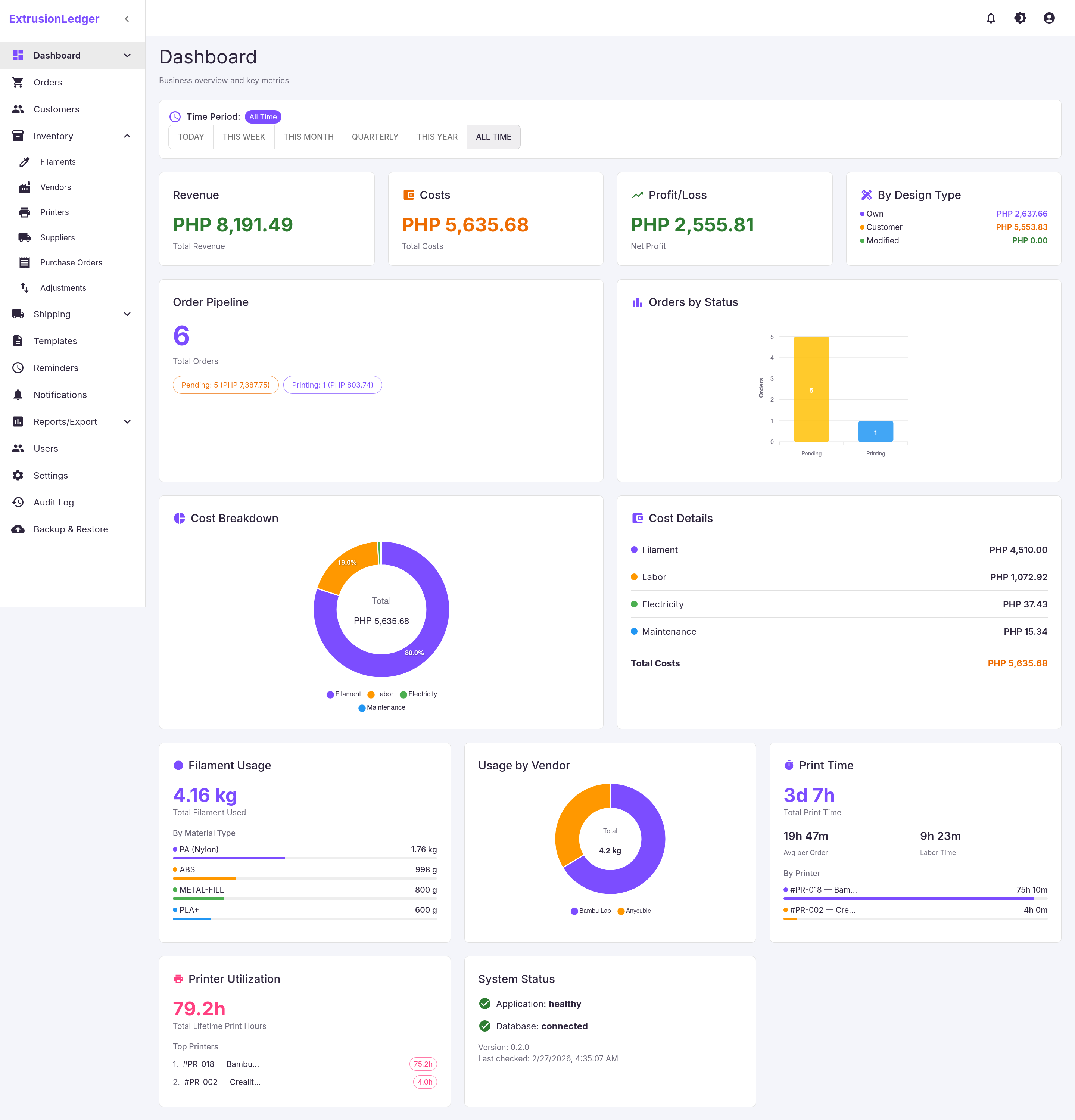
Dashboard overview
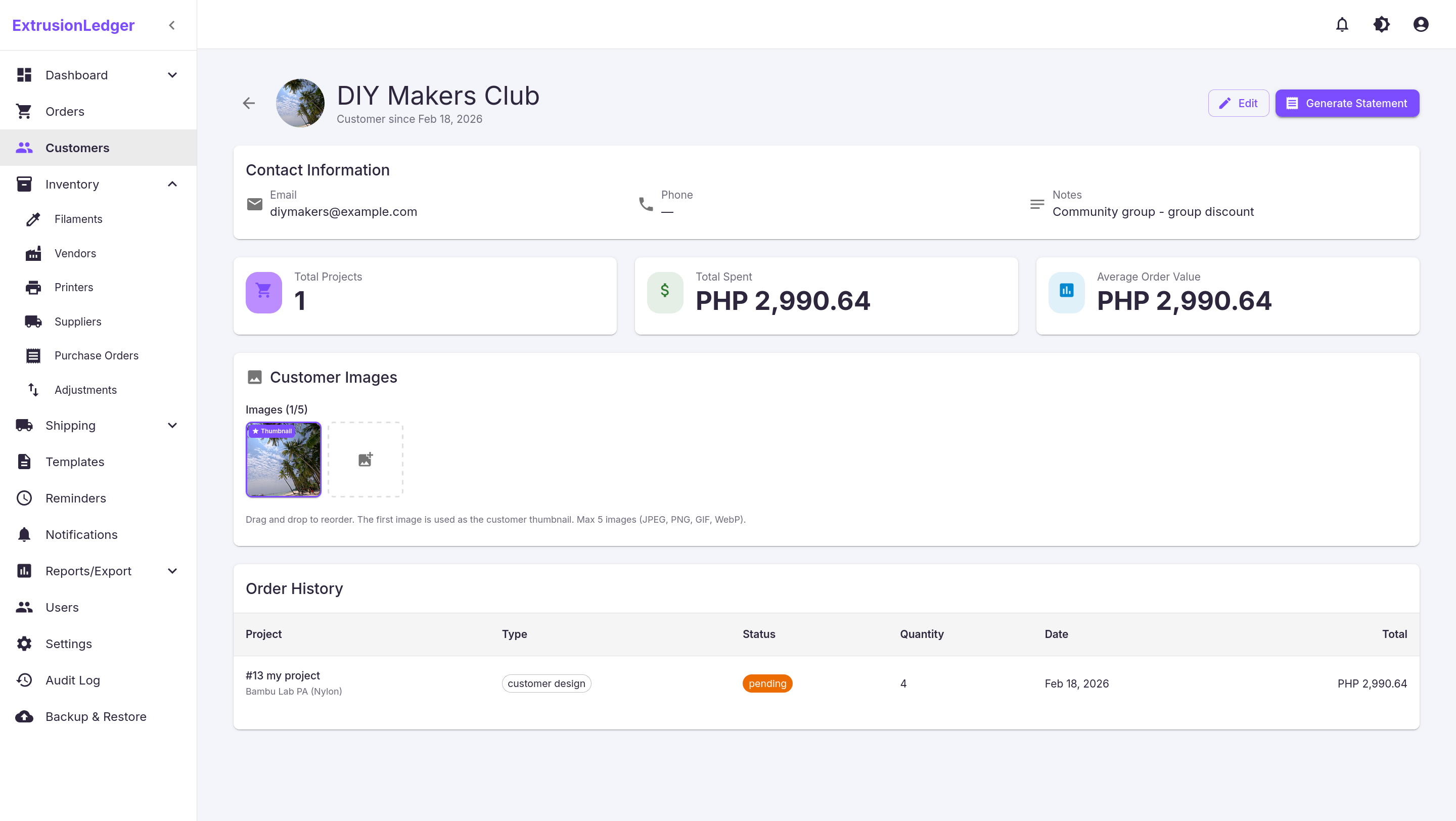
Customer management
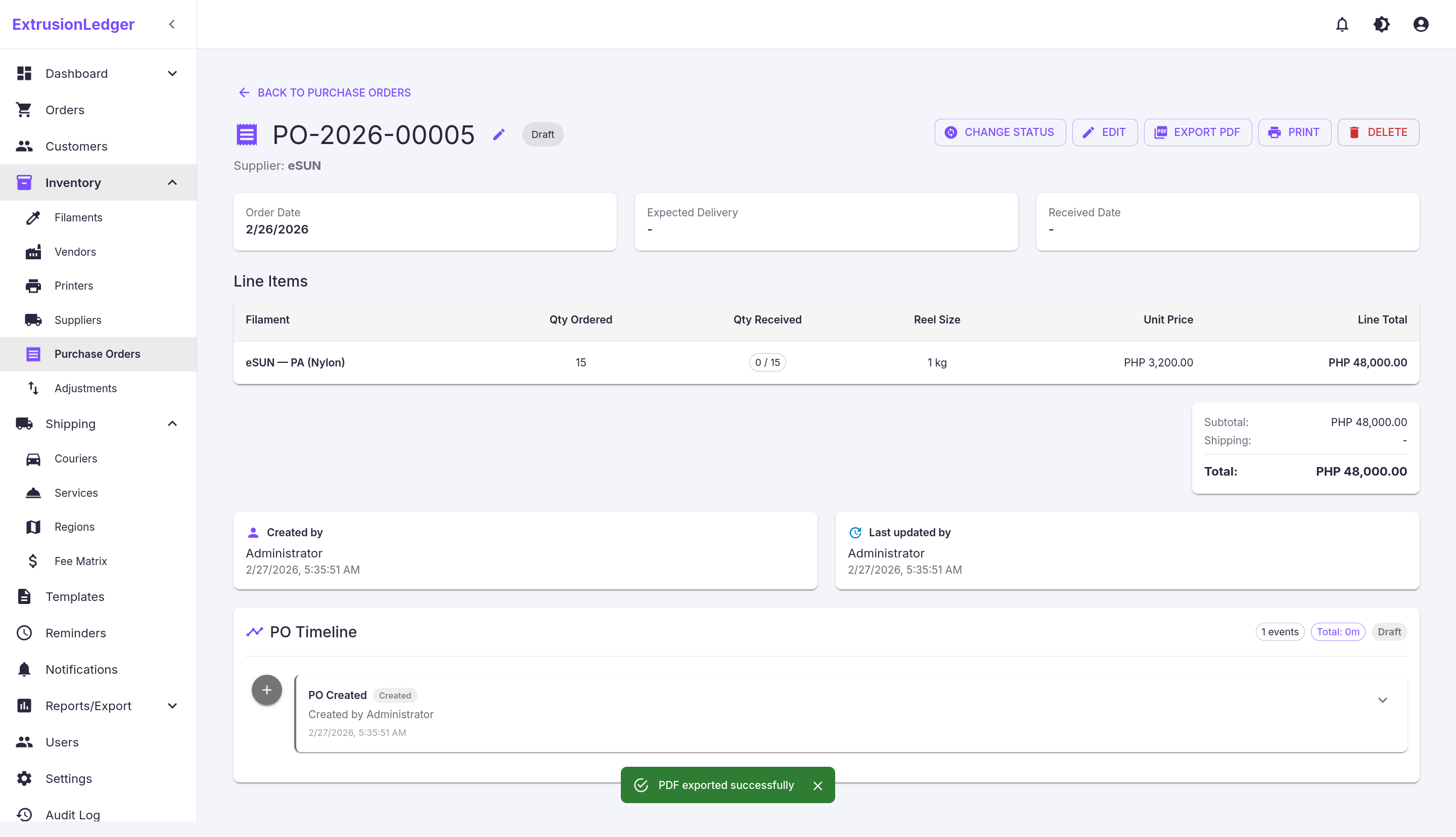
Purchase orders
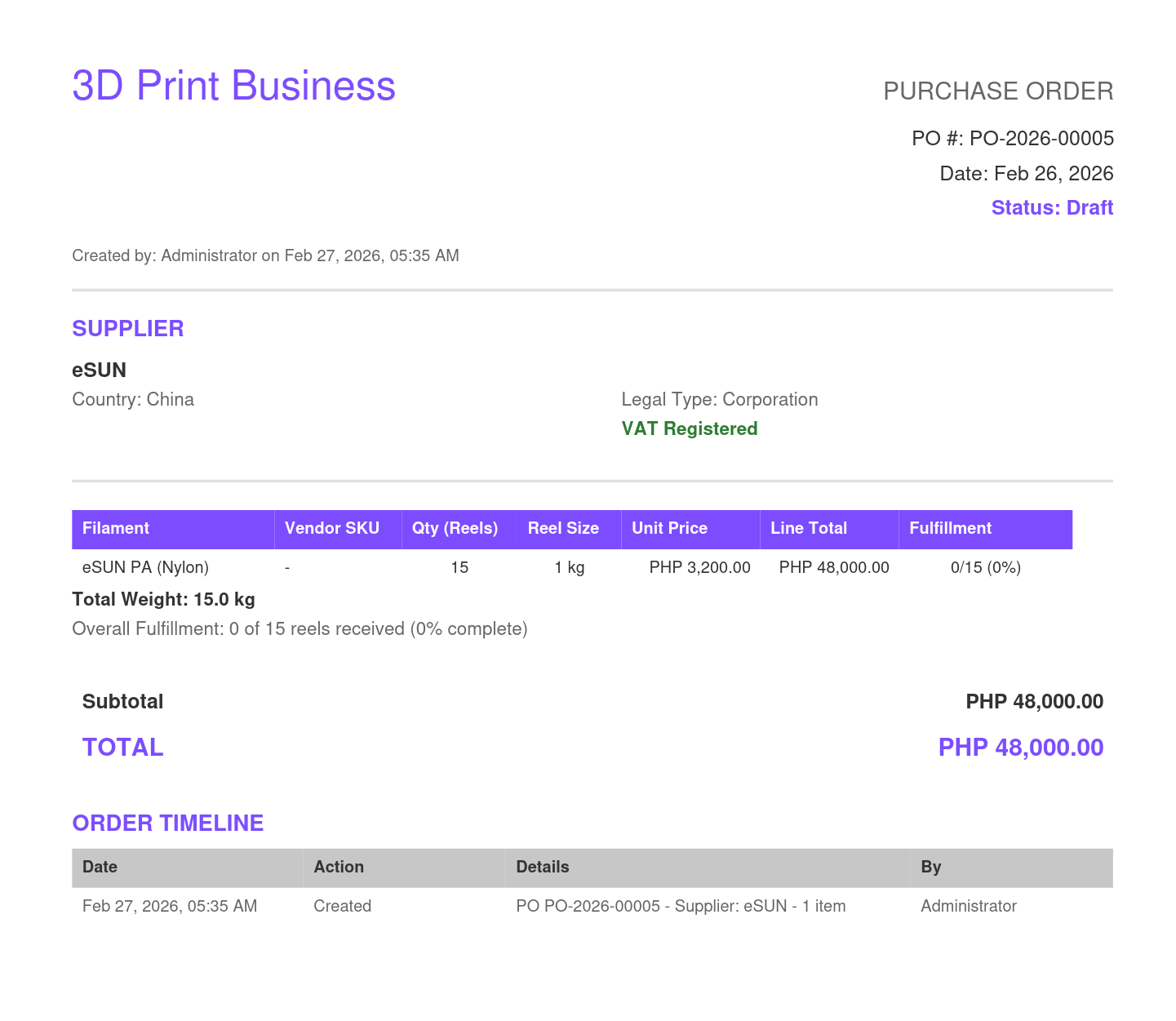
PDF export
Who This Is For

Operators who want to run on data, not instinct

This isn't for everyone - and that's the point.

🏭
Print businesses doing real volume You have customers, repeat orders, and costs you need to track. Spreadsheets stopped working a while ago.
📐
Operators setting up properly You're moving from hobby to business and want to build on the right systems from day one - not retrofit them later.
🖨️
Print farms tracking utilization Multiple printers, multiple jobs. You need throughput visibility, failure rates, and actual per-job costs.
📉
Anyone tired of guessing margins You know you're leaving money on the table. You just can't prove where.
🔁
Shops that value repeatability You want consistent processes - same quoting logic, same job flow, same quality checks - every time, not just when you remember.
📋
Operators who need an audit trail You want to know who changed what, when, and why. No more "I thought you handled that" conversations.
What It Helps You Control

The operational blind spots this covers

Built for the parts of running a print operation that most software ignores.

Quoting and pricing logic

Factor in material, electricity, labor, overhead, and target margin. Two calculation methods. Consistent quotes every time - not guesses based on feeling.

📦
Job tracking from intake to delivery

Every order moves through a clear lifecycle with status tracking, file attachments, and a visual timeline. Duplicate past orders. Save templates for repeat work.

📊
Material costs and waste awareness

Track filament by the gram, electricity by the kilowatt. See real costs per job, not estimates. Understand your waste rates and where material goes.

🔧
Printer utilization and throughput

See what's running, what's queued, and what's idle. Identify bottlenecks. Plan capacity instead of reacting to it.

🔍
Failure tracking and root causes

Log failed prints. Track failure rates by printer, material, and job type. Find patterns instead of writing them off as bad luck.

📑
Invoicing and financial clarity

Branded PDF invoices and quotes with your logo. Revenue, costs, and margins at a glance. Tax-ready formats. Know what's actually profitable.

Also built in: 3D file preview (STL/3MF), vendor and supplier management with purchase orders, multi-currency support (15 currencies), notification channels (Slack, Discord, Telegram, Mattermost, Matrix, email), team roles with 96+ permissions and full audit trail, REST API with 200+ endpoints, and automatic backups to S3, Google Drive, or Nextcloud.

The Beta

A working relationship, not a product demo

I'm selecting 10 - 30 operators. Small by design, so I can support each one properly and act on feedback fast.

How it works

1
You get full platform access

Not a sandbox. You run it against your real operation - real orders, real customers, real numbers.

2
You share structured feedback

Periodic check-ins - what's working, what's broken, what's missing. Bugs go through the ticket system. I read and respond to everything.

3
I ship fixes and improvements

This is active development. Bugs you report get fixed. Feature requests get considered seriously. Your feedback directly shapes what gets built next.

4
You sign an NDA before getting access

Accepted applicants sign a mutual NDA before onboarding. It protects both sides - your business data and any unreleased platform features.

5
You stay or you leave - no pressure

If it's not for you, walk away any time. No guilt, no awkward emails, no obligation.

What early adopters get

  • Founding operator status
  • Locked-in pricing when the product goes paid
  • Direct line to the developer - not a support queue
  • Extra votes in the feature voting system
  • Priority consideration on feature requests
  • Support via Telegram group and email tickets

Who I'm looking for

A mix of operator types - roughly half established businesses who need better tooling, and half newcomers setting up operations who want to start with the right systems. Diversity of operations matters more than size. A two-printer shop with real customers is just as valuable as a 20-printer farm. Applications are reviewed manually.

Roadmap influence

Public feature voting is coming. Beta operators will be the first to use it, and early adopters get significantly more votes to weigh in on priorities. Longer term, I'm exploring what a network of independent operators could look like - shared capacity, overflow coordination - but that's future thinking. Right now, the focus is getting the core platform right.

Questions

Frequently asked

Apply

Interested? Tell me about your operation.

Takes about 30 seconds. I review every application personally.

No spam. No unsolicited messages. Opt out any time.

Applications are temporarily closed. Check back later.

Application received.

I review every application manually. If your operation is a good fit for the beta, I'll reach out by email with next steps. Thanks for your interest.